
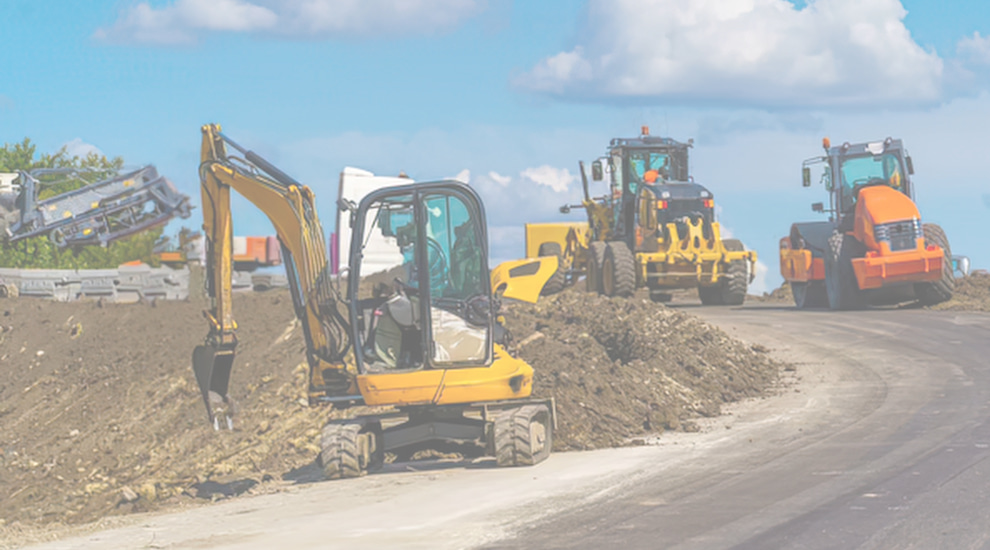
In this blog, ITEN member Martin Lamb explores some of the barriers affecting infrastructure delivery in the UK, from the adoption of new construction technologies to the importance of whole-life costing and sharing the risks of innovation. He considers what needs to change to support more consistent and effective project delivery:
Along with talking about the weather and queuing etiquette, a national British pastime is complaining that infrastructure in the UK takes too long to build and costs too much, and why can’t we be more like France, Spain or China.
I’m not going to talk the UK down, as there are people on the news every night who do it for a living and are better at it than I am. We can, and do, build fantastic things. Yes, the Elizabeth line came in late and over budget, but it’s an engineering marvel that millions of passengers now benefit from. The Thames Tideway Tunnel and parts HS2 demonstrate extraordinary engineering capability, as does Hinkley Point C – one of the biggest engineering projects in the world.
And yet, we only have about 70 miles of high-speed rail, only 8 UK towns and cities have trams. Go to a city on the continent the size of Leeds, Liverpool or even a smaller city like Swansea, and it’s more likely than not, that they’ll have a multi-line tram system. Our second attempt at high-speed rail has, to put it gently, not been an unparalleled success. We still have large sections of the railway that are unelectrified, and the electrification of the Great Western Mainline came in late and overbudget and delivered less than originally planned.
So why, when we can get things so right, do we so often struggle? You could write a thesis on that. Here are 5 things that I think would help.
1. Give industry a credible pipeline of work.
A consistent pipeline of infrastructure investment gives business confidence to invest in people, equipment and better ways of working. This in turn, raises productivity. Conversely, stop-start investment does the opposite. Take rail electrification; in several European countries, there has been a consistent programme of electrification. In contrast, the Great Western Mainline electrification was undertaken from 2017 to 2020, decades after electrification of the West Coast Mainline in 1974 and the East Coast Mainline in 1991. It doesn’t take an engineering genius to work out the inefficiency.
A pipeline needs to be more than just a list of aspirations; industry needs reasonable confidence that works will proceed.
2. Stop treating every scheme like a prototype
Why have the tram schemes in the UK cost more than double than those on the continent? The main culprit is a requirement to dig up and move almost every utility, where most are just left in place in France and other countries. The other culprits are a lack of light rail standards, so often, heavy rail standards are used in their place, resulting in massive overengineering. The third culprit goes back to the previous point of pipelines. There has been no consistent pipeline of light rail in the UK, so all the cities have effectively built bespoke systems. A consistent pipeline and consistent standards drives efficiency, competition and lowers cost.
The same criticism could be levelled at HS2. Rather than build a ‘standard’ high speed rail link like HS1 and most of the lines on the continent, doing 186 mph, which is more than fast enough a small island in the North Atlantic, it was decided to build one that went 250 mph, required new tracks and trains. This, in itself, isn’t the worst idea, if the lessons and technologies developed in phase one to Birmingham, were continued in the now cancelled phase 2 and potential future HS3 or HS4. As someone said, it is the equivalent of Henry Ford spending all the money developing the Model T, then only building one of them
3. Plan transport and development together
Transport and land-use planning still too often happen separately. We decide where homes and businesses should go, then work out how people will reach them—or build transport infrastructure without making enough of the development opportunities it creates. Combined authorities and regional approaches can help, but the connection needs to be stronger.
Take the Burns stations planned on the South Wales Mainline, apart from Cardiff Parkway, which was always designed around a business park, the others, whilst plugging long-standing gaps in access to rail transport, seem to be missing a trick in not considering housing, shops and workplaces alongside the stations. A station should be part of a place, not simply a platform with a car park. Done well, this can bring more people within easy reach of public transport, strengthen passenger demand and create opportunities to capture some of the increased land value to help fund infrastructure. There’s space at most of them to do this – I’ve checked.
4. Sharing the risks of adopting new technology
Say you had a technology that would improve transport infrastructure constructure quality, increase productivity, improve safety and lower environmental impacts, you’d use it wouldn’t you? Well, Connected and Autonomous Plant (CAP) offers this potential, but its uptake remains limited, for reasons explored in my earlier blog, and the market assessment involving ITEN.
One barrier is the allocation of risk.
A contractor pricing a bypass can estimated the using conventional plant and traditional methods. Intelligent machines may deliver savings, but potentially involves extra spending, training and uncertainty.
There’s not a huge incentive to change if the contractor takes all the risk, where the client expects a share of any savings. Government support often helps fund innovation, but this rarely extends to early adoption on live schemes.
Clients and contractors need arrangements that share both the benefits and the risks, with clear measures of success. Successful deployments can then provide the evidence and confidence needed for wider adoption.
For CAP, and other modern methods of construction, the technology is no longer the problem, we just need to use it.
5. Still a focus on initial first cost
Whilst there have been improvements, there remains a focus on lowest initial cost for many schemes, rather than a consideration of whole life cost. In constrained budget times, this is understandable, but can also be expensive. Modest savings during construction can be outweighed by more frequent maintenance interventions, shorter lifespan and disruption. Sometimes the cheaper option is the right one. Sometimes, spending more now, saves considerably more in the future. We need to distinguish between the two.
The UK’s problem is not a shortage of engineering talent or ambition – we have a track record of outstanding engineering and architectural schemes. The challenge is making that success more consistent: giving industry dependable work, reusing good designs, connecting transport with development, sharing the risks of innovation and buying for long-term value. None offers a quick fix, but together they would help us turn exceptional projects into a more reliable record of delivery.
At the very least, it would give us something different to discuss whilst we queue – no pushing in.
Recent Comments